Jaguar E-Type 1965 review
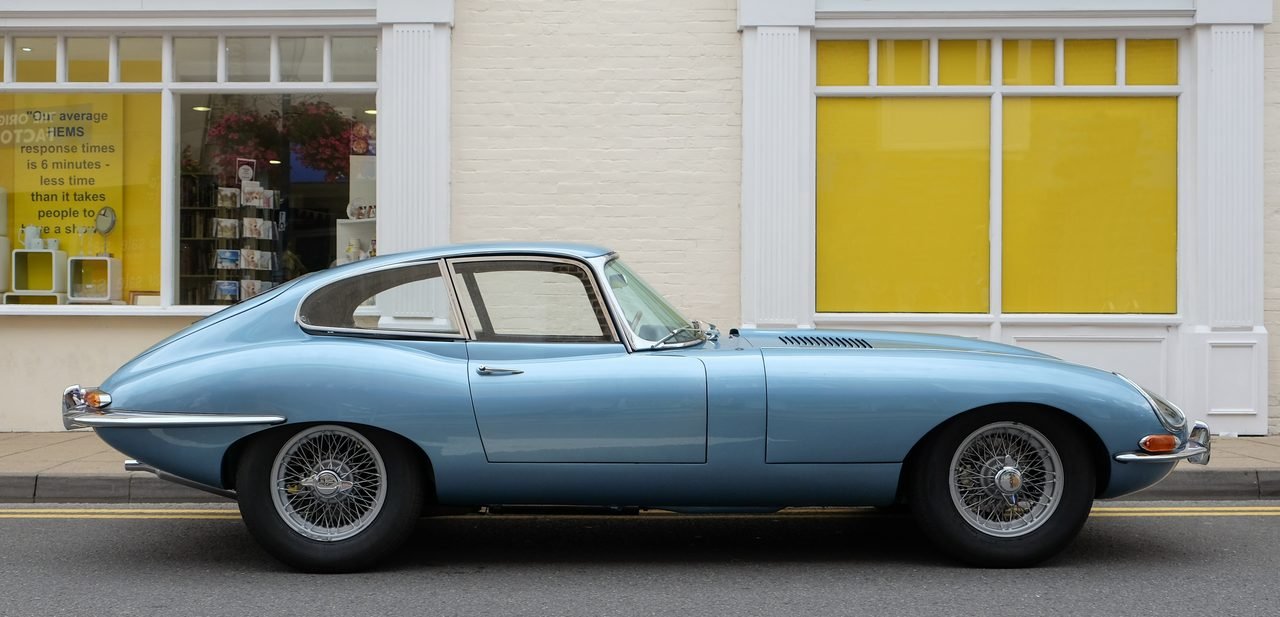
Photo: DeFacto (CC BY-SA 4.0), via Wikimedia Commons
Overview
Few cars can stop a crowd the way a Series 1 E-Type coupé can. Launched at the Geneva Motor Show in March 1961, Jaguar's D-Type-derived grand tourer combined 150 mph performance with looks so striking that Enzo Ferrari is famously said to have called it "the most beautiful car ever made". The 1965 cars are the sweet spot of the Series 1: the 4.2-litre XK engine, introduced in late 1964, kept the 265 bhp but added a useful slug of torque, a proper all-synchromesh gearbox, more comfortable seats and better electrics — with the delicate glass-covered headlamps and slim bumpers untouched.
On the road it remains a genuine event. The twin-cam straight six pulls with effortless, creamy torque from barely above tickover, the triple SUs give a soundtrack no modern car can fake, and the independent rear suspension — exotic stuff in 1961 — still gives the E-Type a poised, fluid gait on a flowing B-road. It is not a car you hustle like a hot hatch; the steering is heavy at parking speeds, the cabin is snug and gets warm, and the brakes ask for a firm shove. But as a grand tourer it is sublime.
Buy on condition and history, not specification. Rust is the killer: check the sills, floor pans, the bulkhead and the steel framework of the forward-hinging bonnet, and get the car on a lift before you commit. Matching engine, chassis and body numbers, confirmed by a Jaguar Heritage certificate, add real value. Cooling was the Series 1's weak point, so ask whether the radiator, fan and water pump have been uprated and watch the temperature gauge in traffic. Expect to pay from around £85,000 for a good, usable driver-quality example, with restored and matching-numbers cars asking considerably more.
Related reviews: Jaguar E Pace 2024 review · Jaguar F Pace 2024 review · Jaguar XF 2024 review
UK price from: £85,000
Specifications
| Engine | 4.2-litre XK DOHC inline-six (4,235 cc) |
| Power | 265 bhp @ 5,400 rpm |
| 0-60 mph | 7.0 sec (approx.) |
| Top speed | 150 mph (claimed; approx.) |
| Production years | 1961–1975 |
| Gearbox | 4-speed manual (all-synchromesh) |
| Drive | Rear-wheel drive |
| Kerb weight | 1,315 kg (approx.) |
Features
- 4.2-litre twin-cam XK straight-six with triple 2-inch SU carburettors
- Four-speed all-synchromesh manual gearbox, new with the 4.2-litre cars
- Independent rear suspension with inboard disc brakes
- Signature glass-covered headlamps and slim chrome bumpers
- Aircraft-style toggle-switch dashboard with full Smiths instrumentation
- Leather bucket seats with reclining backrests on 4.2-litre cars
- One-piece forward-hinging bonnet for superb engine access
Common parts & prices
| Part | Price (GBP) | Notes |
|---|---|---|
| Front brake pads (set) | £54.99 | Fits the Dunlop front calipers on all Series 1 cars; budget an hour a side to fit. |
| Clutch kit | £249.95 | Three-piece kit for the 4.2 all-synchromesh gearbox; gearbox-out job, so fit a new release bearing too. |
| Water pump | £129.50 | Standard replacement for the XK six; a sensible change during any cooling overhaul. |
| Stainless steel exhaust system | £649 | Full stainless system in original mild-steel style; lasts far longer than the factory exhaust. |
| SU carburettor rebuild kit (set of 3) | £189.95 | Gaskets, needles and seals for the triple 2-inch SUs; transforms lumpy running. |
Pros
- One of the most beautiful cars ever built — genuine blue-chip status
- Effortless 4.2-litre torque makes it a usable long-distance grand tourer
- Huge UK specialist network and excellent parts availability
- Strong, resilient values for well-kept Series 1 coupés
Cons
- Serious rust in sills, floors, bulkhead and bonnet frames is expensive to fix
- Specialist servicing and engine rebuilds cost real money
- Cooling is marginal — Series 1s are notorious for running hot in traffic
- Cramped, warm cabin; heavy steering and brakes feel dated in town