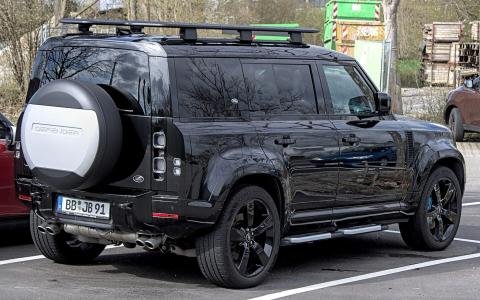
Land Rover Defender 110 1990 review
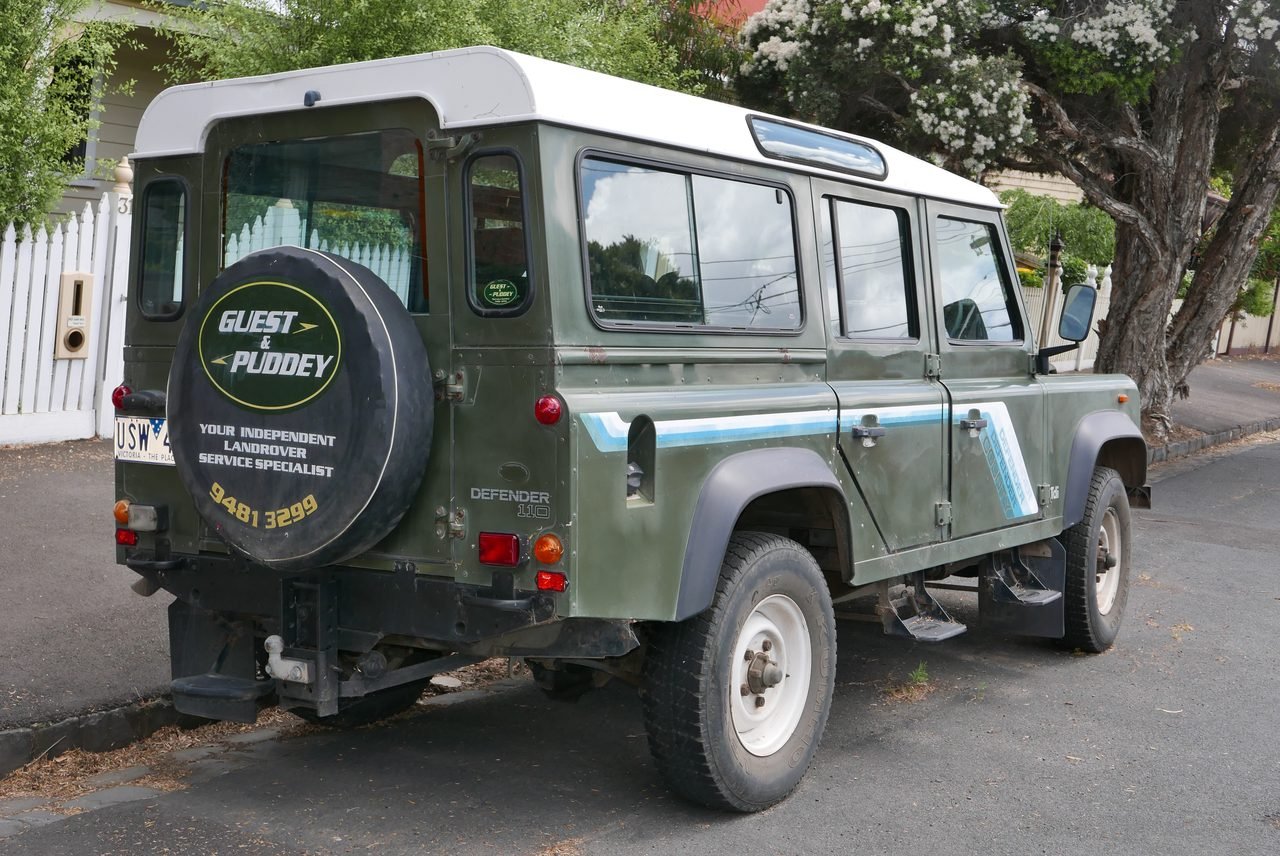
Photo: OSX (Public domain), via Wikimedia Commons
Overview
The year 1990 matters in Land Rover history: it is the moment the workhorse One Ten was renamed the Defender, following the launch of the Discovery in 1989. The new name arrived alongside a new engine that transformed the big wagon — the 200Tdi, a 2.5-litre turbo-diesel with an intercooler and direct injection, producing 107 bhp and 188 lb-ft of torque. That was nearly a quarter more power and torque than the outgoing 2.5 TD, and it turned the 110 from a glacial motorway struggler into something that could genuinely tow and tour. Many enthusiasts still rate the 200Tdi as the finest engine ever fitted to the old-shape Defender.
Driving a 1990 110 today is an exercise in honesty. There is no refinement worth the name: wind noise, a high and upright seating position, heavy steering at parking speeds and a 5-speed LT77 gearbox that rewards a deliberate hand. But the permanent four-wheel-drive system with its two-speed LT230 transfer box gives it go-anywhere ability that modern SUVs merely imitate, and the boxy body is endlessly practical. Everything is simple to service, parts are cheap, and there is an enormous specialist network across Britain.
Buy with your eyes on the structure, not the paint. The 200Tdi itself is famously hardy — head gaskets, injectors and the timing belt aside — but the steel chassis rusts at the outriggers, the rear crossmember and the front dumb irons, and the bulkhead rots around the windscreen frame and footwells. Budget for a galvanised-chassis example if you want an easy life. A good, usable 200Tdi 110 — solid where it counts, honest where it is not — starts from around £17,500 today, with the very best commanding far more.
Related reviews: Land Rover Defender 2024 review · Land Rover Discovery 2024 review · Land Rover Discovery Sport 2024 review
UK price from: £17,500
Specifications
| Engine | 2.5-litre 200Tdi turbo-diesel, intercooled, direct injection |
| Power | 107 bhp @ 4,000 rpm |
| 0-60 mph | 17.8 sec (approx.; factory claim) |
| Top speed | 80 mph (approx.; factory claim) |
| Production years | 1990–2016 (Defender nameplate) |
| Gearbox | 5-speed manual (LT77) |
| Drive | Permanent 4WD with 2-speed LT230 transfer box |
| Towing capacity | 3,500 kg braked (approx.) |
Features
- 2.5-litre 200Tdi turbo-diesel engine with intercooler and direct injection (107 bhp)
- Five-speed manual gearbox (LT77) with permanent four-wheel drive
- Two-speed LT230 transfer box with lockable centre differential
- Separate steel ladder-frame chassis with bolt-on body panels
- Coil-spring suspension front and rear, live axles with front disc brakes
- Seven-seat (approx.) Station Wagon layout with a vast load area
- High ground clearance with short front and rear overhangs
- Simplicity throughout: easy to service with basic tools
Common parts & prices
| Part | Price (GBP) | Notes |
|---|---|---|
| Clutch kit | £189.99 | Heavy-duty kit including cover, plate and release bearing; fits 200Tdi Defender 110 with LT77 gearbox |
| Brake pads (front set) | £24.50 | Axle set of disc pads for the front axle; check whether solid or vented discs are fitted |
| Water pump | £42.95 | 200Tdi-specific pump with gasket; replace alongside the timing belt |
| Rear crossmember | £119 | Weld-in galvanised rear crossmember with NATO hitch holes; the single most common structural repair |
| Fuel filter | £12.99 | Spin-on diesel filter element for the 200Tdi; change annually for injector health |
Pros
- The 200Tdi engine is regarded as one of the toughest diesels Land Rover ever built
- Enormous, affordable parts availability and a vast UK specialist and club network
- Outstanding off-road ability from the permanent 4WD and two-speed transfer box
- Strong values: good examples have appreciated steadily for a decade
Cons
- Chassis and bulkhead rust are the biggest bills; repairs can run into thousands of pounds
- Extremely noisy and slow by modern standards — 0-60 takes nearly 20 seconds
- Crude ergonomics: cramped driving position, poor heating and minimal security
- 25–30 mpg (approx.) plus classic-car insurance and maintenance costs