Mini Classic 1965 review
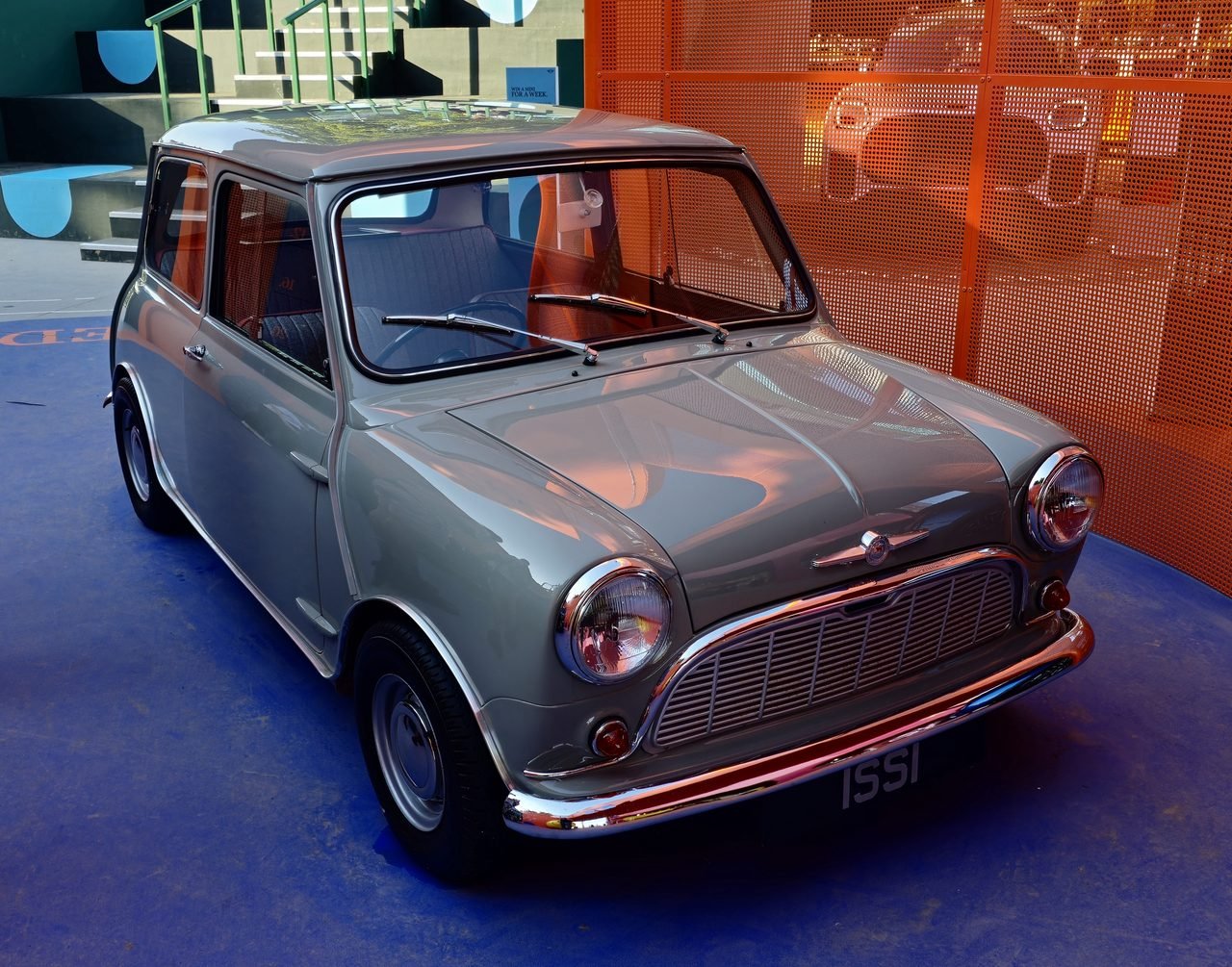
Photo: Calreyn88 (CC BY-SA 4.0), via Wikimedia Commons
Overview
The 1965 Mini belongs to the revered Mk I era (1959-1967) of Alec Issigonis's masterpiece, launched as the Austin Seven and Morris Mini-Minor in 1959. By 1965 the tiny giant of British motoring was already a cultural icon, its transverse-mounted A-series engine and front-wheel drive having revolutionised small-car packaging years ahead of the competition. A 1965 car keeps all the purest Mk I details - external door hinges, sliding front windows and the original grille treatment - while benefiting from Hydrolastic suspension, introduced in late 1964 to soften the earlier rubber-cone ride. With the Mini's Monte Carlo rally glory making headlines through the mid-1960s, even the humble 848cc saloon carries real star quality.
Behind the wheel, a 1965 Mini is a time machine. The 848cc A-series makes around 34 bhp (approx.), enough for roughly 26.5 seconds to 60 mph (approx.) and a top speed near 72 mph (approx.) - leisurely by modern standards, but the go-kart handling, direct steering and wheels-at-each-corner stance make 30 mph feel like an event. The four-speed manual, with synchromesh on the upper three gears, rewards planning ahead, while 50 mpg-plus economy is realistic on a gentle run. Expect noise, a busy ride and thin trim; this is motoring stripped to its essentials, and all the more charming for it.
If you are buying, rust is everything. Inspect the inner and outer sills, A-panels, floors, both subframes, the boot floor and the front wings behind the wheels - filler and patch panels hide a multitude of sins, so a jack-up inspection and a fridge magnet for finding filler are wise precautions. Mechanically the A-series is tough and parts are plentiful from Mini specialists, so favour a solid body over a shiny one: a straight shell with tired running gear is the smarter buy than a gleaming car hiding rot. Budget from around £8,950 for a good usable example; projects start at roughly half that, while genuinely top Mk I cars command far more.
Related reviews: MINI Aceman 2024 review · MINI Cooper 2024 review · MINI Countryman 2024 review
UK price from: £8,950
Specifications
| Engine | 848cc A-series OHV inline-4, petrol |
| Power | 34 bhp (approx.) |
| 0-60 mph | 26.5 sec (approx.) |
| Top speed | 72 mph (approx.) |
| Production years | 1959-2000 |
| Gearbox | 4-speed manual (synchromesh on 2nd, 3rd, 4th) |
| Drive | Front-wheel drive |
| Kerb weight | 585 kg (approx.) |
Features
- Transverse 848cc BMC A-series OHV four-cylinder - the original engine-and-gearbox-in-the-sump layout
- Front-wheel drive with the gearbox mounted beneath the engine, driving the front wheels
- Hydrolastic fluid suspension (fitted from late 1964), softer and more level-riding than the earlier rubber-cone set-up
- Go-kart handling thanks to wheels pushed to the car's corners and a short 80.2-inch (approx.) wheelbase
- Mk I detailing: external door hinges, sliding front windows and the original grille treatment
- Front disc brakes with rear drums on tiny 10-inch wheels
- Four-seat cabin with around 195 litres (approx.) of boot space despite the car's ten-foot length
- Manual everything - no power steering, no electronics and typically no brake servo on standard cars, so home maintenance is genuinely easy
Common parts & prices
| Part | Price (GBP) | Notes |
|---|---|---|
| Front brake pads (set) | £24.99 | For front discs, standard on 1965 cars; fits classic Mini 1959-2000 with disc front brakes |
| Clutch kit (cover, plate, release bearing) | £119.99 | Fits A-series 848-1275cc; engine-in-sump layout means clutch work is best left to a Mini specialist |
| Water pump | £29.99 | Fits A-series engines 1959-2000; always renew the gasket with the pump |
| Exhaust middle and rear section | £79.99 | For classic Mini saloon; check bore size and hanger type before ordering |
| Contact points set | £8.99 | For standard A-series distributor; an electronic ignition conversion is a popular reliability upgrade |
Pros
- Early Mk I cars are widely regarded as the most desirable and collectable of all classic Minis
- Superb parts supply - sills, body panels, trim and mechanicals are all available new from Mini specialists
- Simple, tough A-series mechanicals that reward DIY maintenance with basic tools
- MOT-exempt in the UK under the 40-year rule, with free historic-vehicle tax and 50 mpg-plus economy on a gentle run
Cons
- Rust is the eternal enemy - sills, A-panels, floors, subframes and boot floors all rot, and proper bodywork repairs are expensive
- Leisurely performance: about 34 bhp means roughly 26.5 seconds to 60 mph and strained motorway work
- Pre-modern safety - no airbags, no crumple zones and rear drum brakes demand real caution in modern traffic
- Noisy, cramped and draughty at speed; long motorway journeys are genuinely tiring